Formwork shapes every concrete pour in India's construction boom. Here's what it does, which materials manufacturers use, and how to choose a supplier you can trust.
Formwork — often called shuttering — is the temporary mould that holds wet concrete in place until it sets into a solid, load-bearing structure. It is one of the least visible parts of any construction project and one of the most decisive: get the formwork wrong, and everything from the surface finish to the safety of the pour is at risk.
India's infrastructure push — metro corridors, expressways, dams, and high-rise housing — has pulled formwork manufacturing out of small, unorganised workshops and into serious industrial territory. Buyers today are comparing manufacturers on production capacity, material quality, engineering support, and turnaround time, not just price per kilogram of steel.
Why Formwork Quality Decides Project Outcomes
Formwork does two jobs simultaneously: it gives the concrete its final shape, and it carries the load of wet concrete plus the workers and equipment on top of it until curing is complete. A formwork panel that flexes, leaks, or misaligns doesn't just spoil the surface finish — it can delay a pour, waste concrete, or in the worst case, compromise site safety.
That is why experienced contractors evaluate formwork manufacturers the same way they'd evaluate a structural sub-contractor: on engineering rigor, not just on catalogue pricing.
Steel Formwork: Strength Built for Repetition
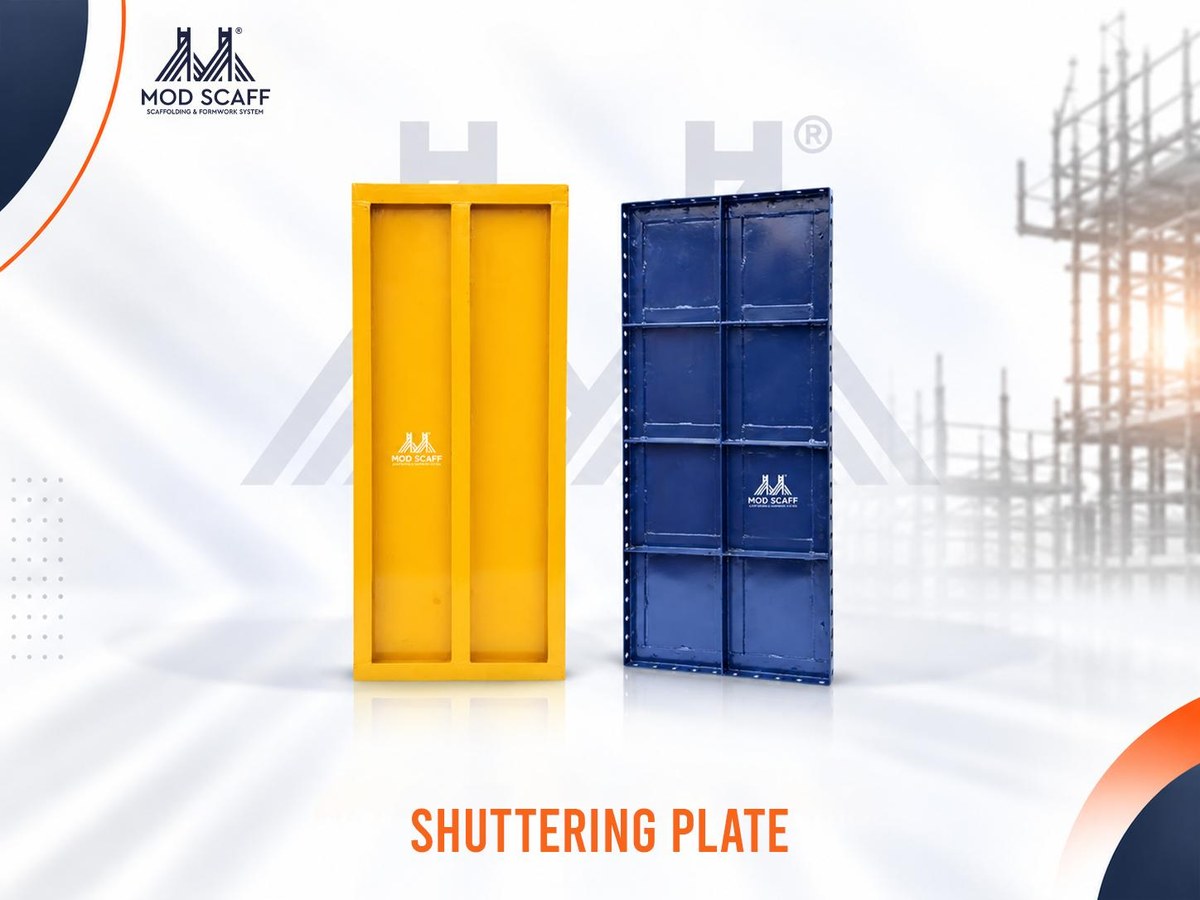
Steel formwork remains the preferred choice for large-scale infrastructure — bridges, dams, metro viaducts, and industrial complexes — where the same panel is reused hundreds of times over the life of a project.
- Advantages: exceptional strength, dimensional accuracy pour after pour, and a long service life that spreads the initial cost across hundreds of reuses.
- Limitations: higher upfront cost than timber or ply, and heavier to transport and handle on site — offset over time by its reusability and near-zero warping.
MOD SCAFF: A Trusted Name in Formwork Manufacturing
At the forefront of India's formwork and scaffolding industry is MOD SCAFF Pvt. Ltd., a manufacturer based in Faridabad, Delhi/NCR. Established in 2000 by Mr. Manoj Sachdeva, the company has grown into a dependable partner for construction firms across the country, specialising in high-quality, customisable formwork systems engineered for India's infrastructure projects.
Why Contractors Choose MOD SCAFF
- Production capacity: 800–1,000 tons per month across our Faridabad and Palwal facilities, so large orders ship on schedule.
- Engineering expertise: decades of hands-on experience translating site drawings into precision-fabricated formwork.
- Technology-led design: 3D modelling and automated design workflows for accuracy before a single sheet of steel is cut.
- ISO 9001:2015 certified quality management, tested at every stage of manufacturing.
The Future of Formwork in India
India's rapid urbanisation is pushing manufacturers toward more resilient and sustainable formwork solutions:
- Sustainable materials: growing interest in engineered wood and recyclable aluminium alongside steel, to align with green construction goals.
- Technology adoption: BIM and 3D modelling are cutting waste and speeding up design-to-site turnaround.
- Higher reuse cycles: newer systems are engineered for more repetitions, lowering the effective cost per pour.
Choosing the Right Formwork Partner
When evaluating a formwork manufacturer, look past the price list. Ask about production capacity and lead times, material grade and certification, in-house engineering support for non-standard geometries, and — most importantly — a track record on projects similar in scale to yours. At MOD SCAFF, we aim to be more than a supplier: a partner that helps you build with confidence and efficiency.
Need formwork or scaffolding for your project?
Talk to MOD SCAFF's engineering team about your site requirements — production capacity of 800–1,000 tons/month, ISO 9001:2015 certified.